A service shaped by the vehicle

Pickup trucks have interruptions that affect layout: door handles, bed rails, tool storage, trim and changing cab configurations.

Pickup trucks have interruptions that affect layout: door handles, bed rails, tool storage, trim and changing cab configurations. A graphic that ignores these details can feel fragmented or become hard to read. Good planning treats the truck as a specific shape rather than a flat sign.

Options may include door graphics, bed side panels, partial coverage or a broader wrap direction. The amount of coverage and placement should reflect how the truck is used, what artwork is available and which details matter most to the business. Existing paint and vehicle condition are part of the planning conversation.

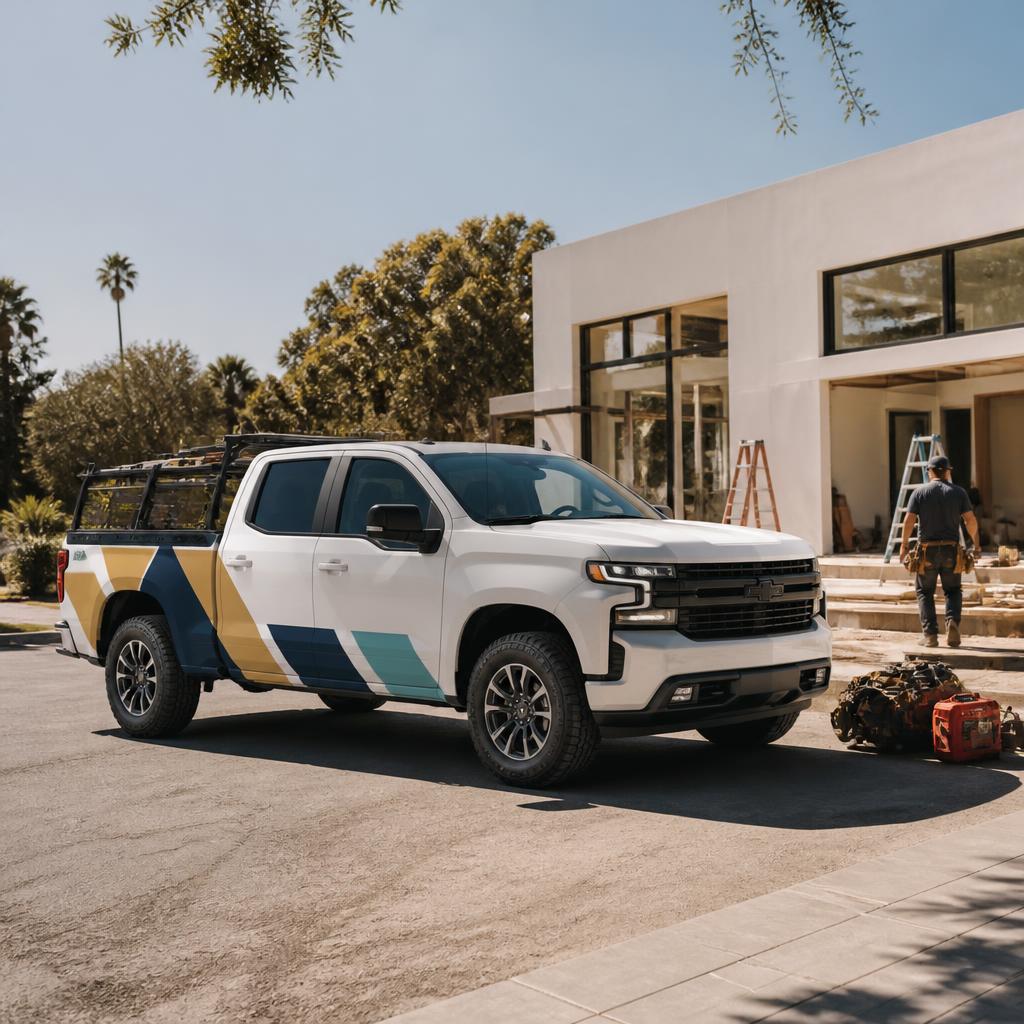
White contractor pickup with restrained teal and golden graphics
Contractor pickup graphics example. Visual inspiration, not a completed client project.
01

Planning

Start with the real vehicle.

Share the truck make, model, year and photographs, along with the artwork or identity elements available. The layout is shaped around the body lines and reviewed before installation. Surface preparation, careful alignment and edge finishing are essential parts of a clean result.

Useful starting details include photographs, vehicle make and model, the number of vehicles and any existing brand artwork. The better the picture of the vehicle, the more useful the early layout conversation becomes.

02

Design considerations

Build a clear visual hierarchy.

Truck graphics should be legible from more than one angle. Short information, strong contrast and a clear hierarchy help people understand the identity quickly. Keep the most important marks away from busy seams and places where equipment or accessories may cover them.

Keep the essential identity recognizable from a useful distance. Consider how graphics read from the side, front and rear, and leave a sensible relationship between visual elements and functional vehicle features.

03

Installation context

Fit and finish follow the surface.

Vehicle condition and material influence preparation and application. The surfaces should be evaluated before an installation plan is confirmed. Panel edges, curves and access points all need to be considered so the design works with the vehicle rather than against it.

Discuss how the vehicle is used and what areas need to remain accessible. Those details help establish a practical, vehicle specific scope.

Project questions

A few details help make the first conversation useful.

What should I share?

Vehicle photographs, size or model information, artwork and a note about the intended look are all useful. It is fine to begin with only some of those details.

Can the artwork change for different body styles?

Yes. A shared visual identity can be adapted to different panel shapes and vehicle types so repeated elements remain recognizable without forcing one layout onto every body.

Where do I begin?

Use the homepage inquiry form to share the basics. There is no need to have every design decision settled before starting a conversation.

Continue exploring

See the full range of wrap services.

Compare vehicle types or share a first project idea.